
Retaining walls in Greenville SC do two things: hold back the soil on a slope and give you usable flat space where there wasn't any. Block, natural stone, and engineered systems sized to handle our heavy red clay when it gets wet.
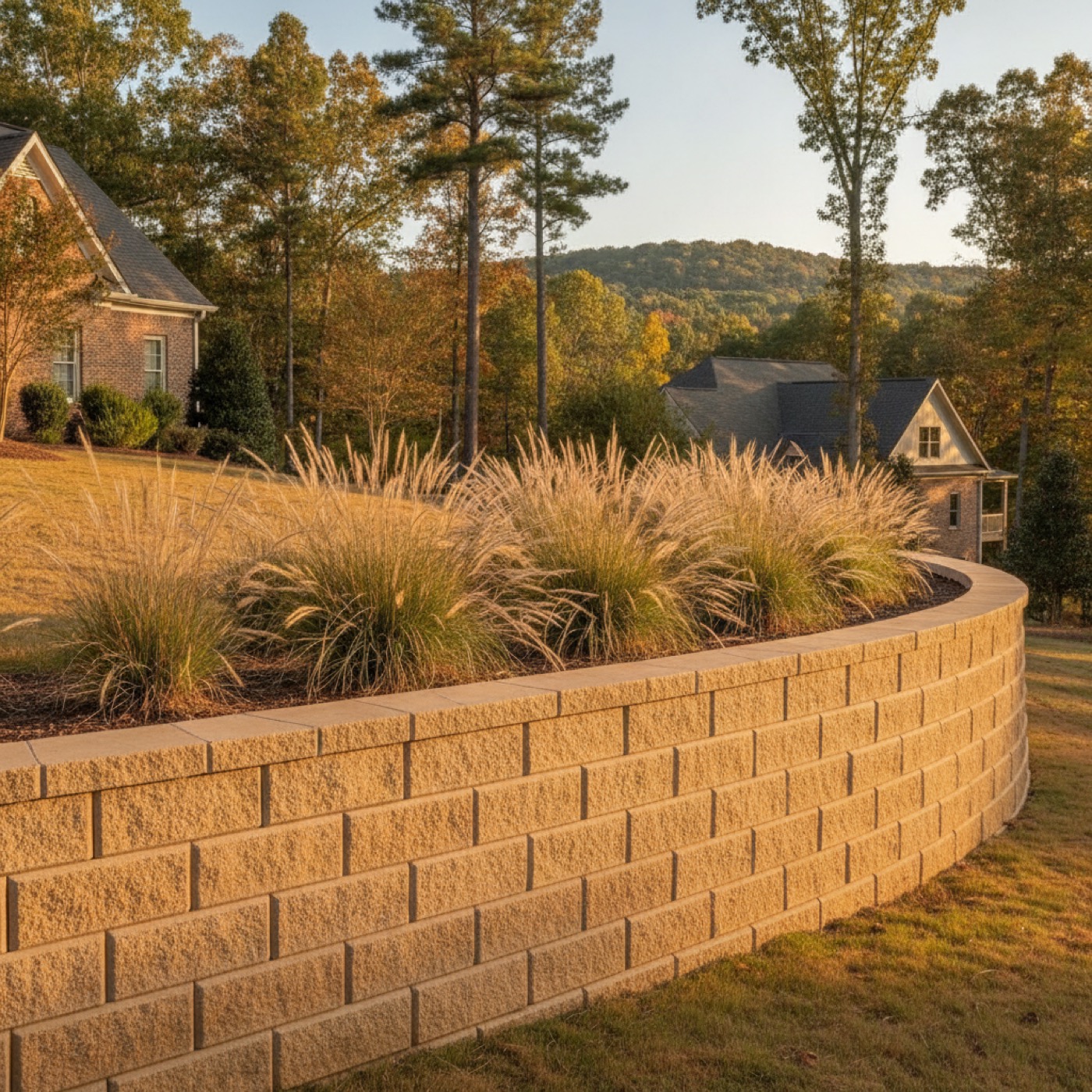
Retaining walls solve two problems at once: they hold back soil on a slope, and they create usable flat space where there wasn't any before. On Upstate SC's rolling terrain, that's a project most properties can use.
Walls under 4 feet are usually built from block or stacked stone with proper drainage behind them. Walls over 4 feet need engineered reinforcement tied back into the slope (that's code). On any wall longer than about 20 feet, we add that same reinforcement even when code doesn't require it, because our red clay is heavy and we'd rather over-build than have you call us back.
A wall is rarely the goal. What sits on top of it is. The minute a slope gets held back, your yard changes: the back hillside you couldn't use becomes a level terrace where a patio, fire pit, or outdoor kitchen can land. The steep front bank that used to wash mulch into your driveway after every storm becomes a planted face that finishes the entry. The side yard that used to slope toward your foundation gets graded away from your house instead of toward it.
That's the conversation we actually want to have at the estimate. We walk the slope with you, talk through what you'd put on top of the wall, and quote the full picture in writing. Once you sign off on materials and layout, the price is locked.
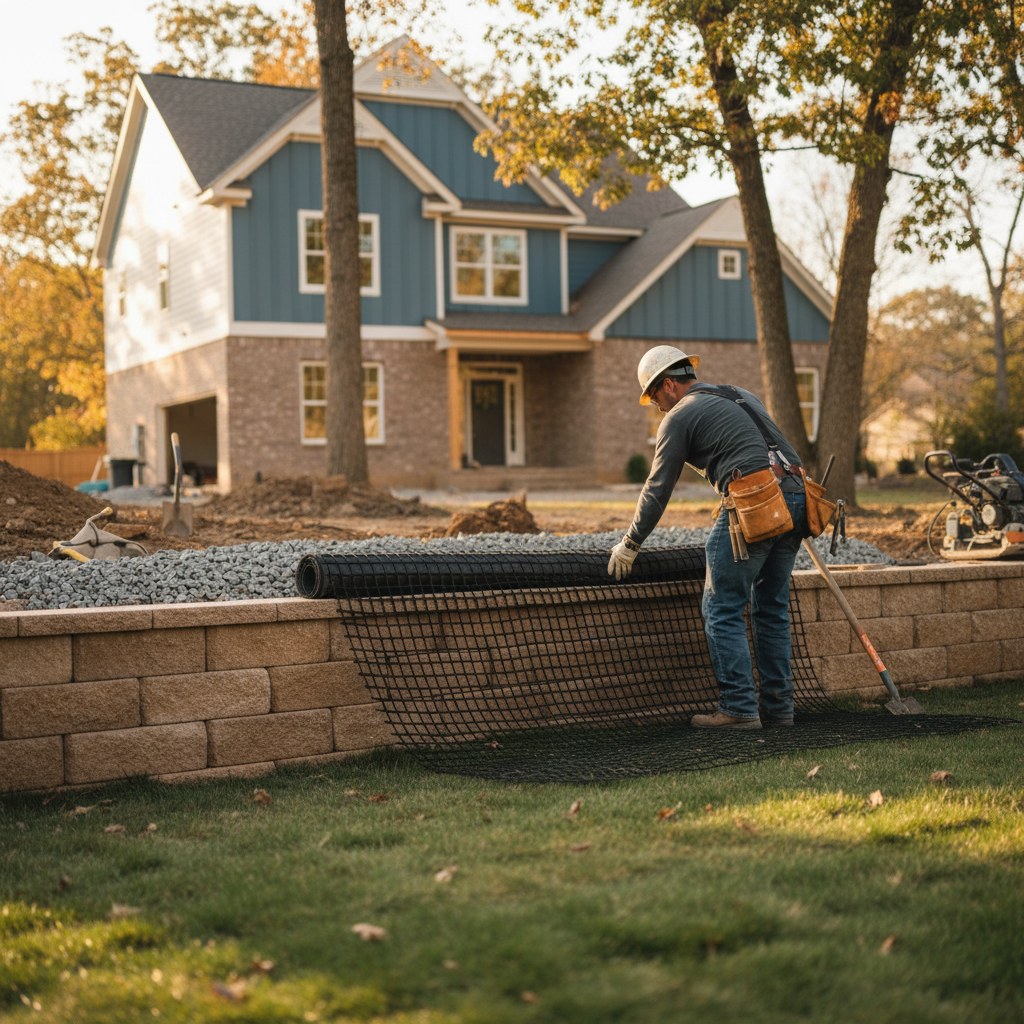
A retaining wall in Greenville SC has to hold back soil that's heavy when it gets wet. The block system you use, the drainage behind it, and whether the wall needs an engineer all depend on how tall it is and what's behind it.
A retaining wall on a sloped Upstate lot has two jobs: hold the soil and move the water. Red clay is heavy when it's saturated, and a wall without proper drainage can fail in a big way after a hard spring rain. Every wall we build has a perforated drain pipe behind the block that runs out to a safe spot, backed by stone that lets water move through freely.
Greenville County and most Upstate cities require an engineered design and a permit for any retaining wall over 4 feet tall (measured from the bottom of the footing to the top of the wall). Walls under 4 feet for residential landscape use usually don't need a permit, as long as the wall isn't holding back a driveway, a structure, or a back-filled slope above it. We confirm the permit details at the estimate. See all hardscape services or outdoor living if you're building a terraced backyard.
Tell us about your project. We read every form ourselves and call you back within an hour during business hours. No call centers. No pressure.